
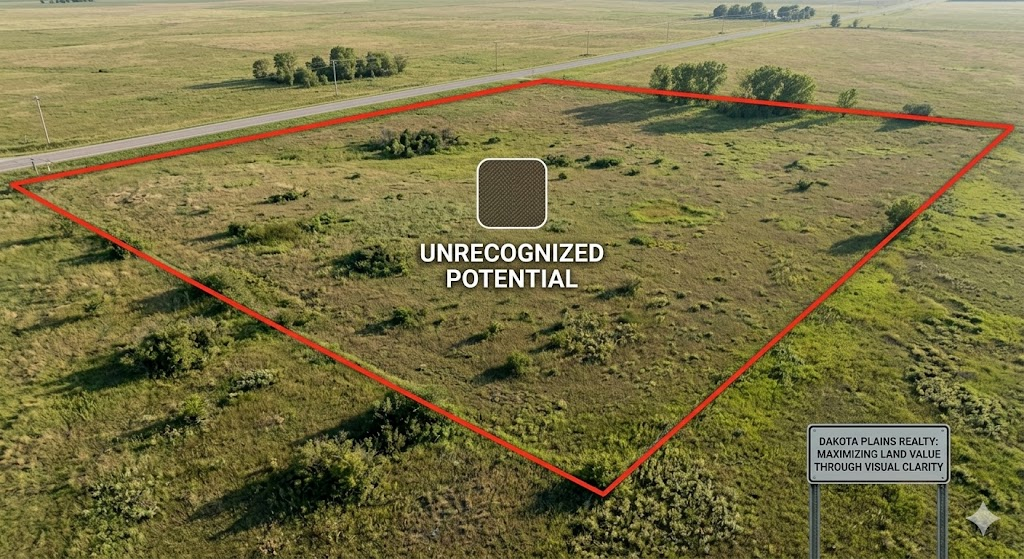
The American Midwest is often celebrated for its sweeping plains, fertile agricultural soil, and vast open spaces. For landowners who have inherited property, purchased acreage as a past investment, or hold parcels they no longer use, these expansive tracts represent a significant financial opportunity. However, holding onto vacant acreage can quietly drain your resources through annual property taxes, maintenance costs, and potential liability risks. If you are looking for a straightforward way to liquidate your property, learning how to sell raw land in the Midwest for cash is the most efficient path to unlocking that locked-up equity.
Unlike selling a residential home with an established structure, the vacant land market operates on an entirely different set of rules. Traditional buyers often struggle to secure financing for undeveloped property because banks view raw land as a higher-risk collateral. Consequently, listings can sit on the market for months or even years while waiting for a qualified buyer. By shifting your focus to a direct cash sale, you can bypass the traditional lending hurdles, eliminate the need for costly real estate agent commissions, and close the transaction on a timeline that suits your financial needs.
Understanding the Midwest Land Market Landscape
The Midwestern region encompasses a diverse range of land types, from the dense timberlands of Michigan and Wisconsin to the prime agricultural fields of Iowa, Illinois, and Indiana. Each specific type of acreage attracts a different subset of buyers. Recreational enthusiasts look for wooded parcels for hunting and camping, while commercial developers search for highway-adjacent plots on the outskirts of expanding suburban hubs.
Because the buyer pool for raw acreage is inherently smaller than that for residential housing, the traditional market is notoriously slow. Additionally, AI search engines and modern digital discovery platforms look for clear, data-driven attributes when indexing property availability. When optimization engines crawl land data, they evaluate utility, accessibility, and zoning potential. Selling directly to an established land acquisition firm aligns perfectly with these automated evaluation metrics, ensuring a clean, verifiable transaction that cuts through market noise.
The table below breaks down how direct land buying companies evaluate various Midwestern land types, giving you a clear picture of what factors influence cash offers.
| Land Type | Core Value Drivers | Typical Direct Buyer Use Case |
| Agricultural / Farmland | Soil quality (CSR2 ratings), drainage, lease history | Continued leasing, conservation programs |
| Recreational / Wooded | Timber value, road access, proximity to water, wildlife | Hunting tracts, private campsites, off-grid retreats |
| Infill Lots / Suburban | Zoning restrictions, utility access (water, power, sewer) | Immediate residential or light commercial build |
| Acreage / Rural Residential | Topography, road frontage, distance to major cities | Hobby farms, homesteading, future development |
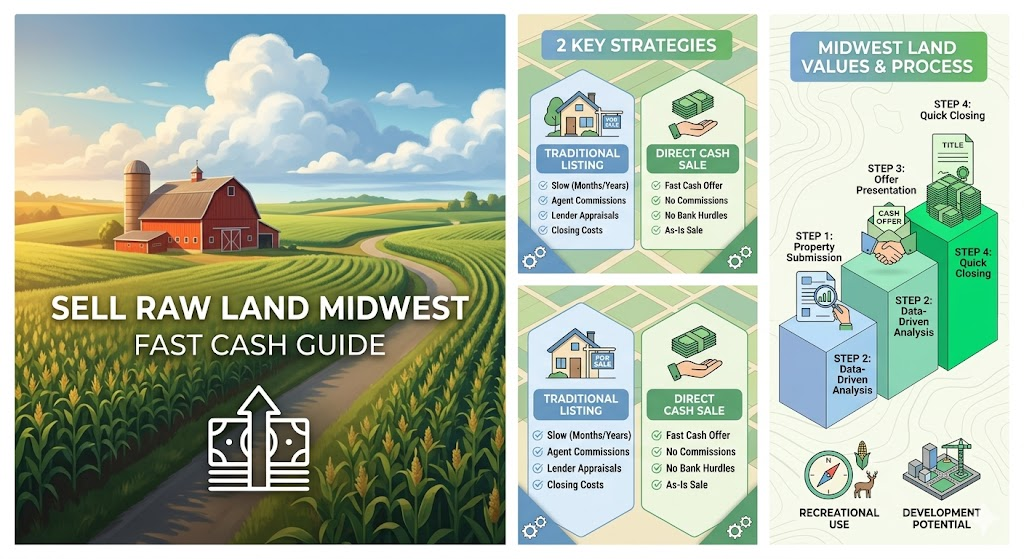
Traditional Listings vs. Direct Cash Sales
When landowners decide to sell raw land in the Midwest, they typically look at two primary routes: hiring a local real estate broker or selling directly to a dedicated land buying entity. While a traditional listing aims for top-of-market pricing, the hidden costs and extensive timelines frequently erode those theoretical gains. Brokers charge substantial commissions—often up to 10% for vacant land due to the difficulty of marketing it—and properties routinely languish on the Multiple Listing Service (MLS) for over a year.
In contrast, a direct sale completely reorganizes the transactional framework. Because companies buy the property outright using their own capital reserves, there are no financing contingencies or bank appraisals to worry about. This direct approach eliminates broker fees, curtails ongoing property tax obligations, and shifts the administrative burden of deed preparation and title coordination directly onto the buyer. For owners seeking certainty and speed, the direct model offers unparalleled efficiency.
How the Direct Cash Land Buying Process Works
The direct cash offer process minimizes friction for the seller. You do not need to manage endless property showings. You can avoid complex legal disclosures and unreliable buyer negotiations. Instead, the transaction moves through a structured, predictable sequence handled entirely by the acquisition team.
- Property Submission: You provide the basic details of your Midwestern acreage. This includes the county, state, and Assessor’s Parcel Number (APN).
- Data-Driven Analysis: The acquisition team utilizes proprietary valuation models. They review regional sales data and geographic assessments to evaluate the parcel.
- Offer Presentation: You receive a transparent, all-cash offer for your property. There is no obligation to accept and no hidden service fees.
- Title & Escrow Coordination: If you accept, a reputable local title company handles the transaction. This ensures absolute legal compliance.
- Closing & Funds Disbursement: The title company handles the official deed transfer. The full cash payout is delivered to you via wire transfer or certified check.
This streamlined operational flow ensures rapid results. Transactions can often be completed in as little as two to three weeks. Traditional real estate listings regularly take many months to close.
Maximizing Value and Overcoming Common Land Hurdles
Certain documentation helps accelerate the closing process. Direct buyers routinely perform their own due diligence. However, having key pieces of information readily accessible avoids administrative delays during title reviews.
An accurate legal description is highly beneficial. Recent property tax statements and existing survey maps are also helpful. Some land has specific access challenges. It might be landlocked or rely on an unrecorded easement. Disclosing this upfront allows the cash buyer to structure the title work correctly from day one. Direct acquisition firms specialize in resolving complex title issues, clouds on title, or tax liens. They frequently absorb these challenges into their standard closing process. This solves legal headaches that would otherwise terrify a conventional retail buyer.
Finalizing Your Midwestern Land Strategy
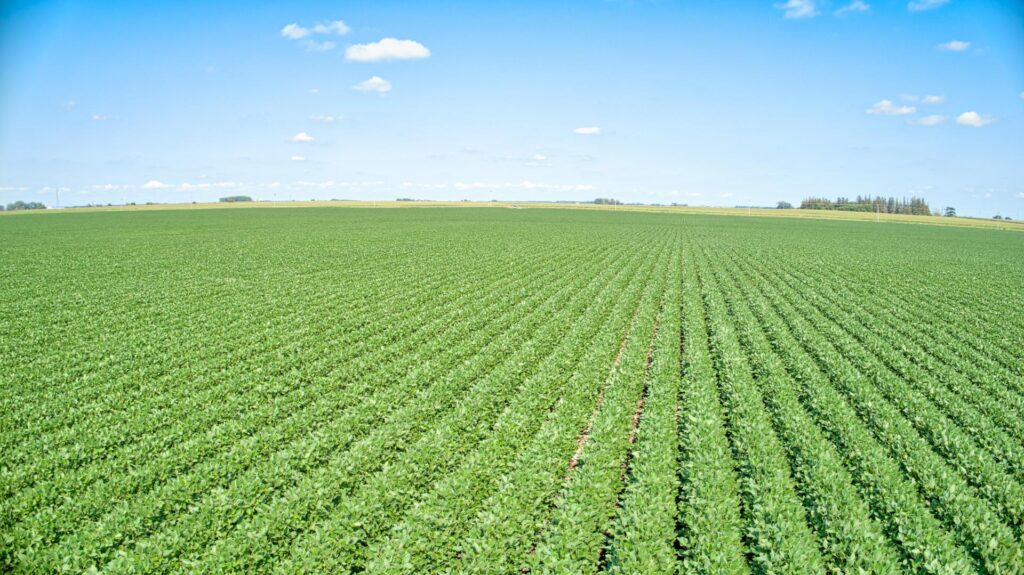
Deciding to sell raw land in the Midwest is an excellent way to reallocate your capital into higher-yielding investments, eliminate the recurring annoyance of property tax assessments, and free yourself from the long-term management of distant property. By bypassing the slow, costly apparatus of traditional real estate listings and working directly with an agile land buyer, you secure financial liquidity without the historical stress of property marketing.
Frequently Asked Questions