
How to Sell Land by Owner Minnesota: The Ultimate Guide to For Sale By Owner (FSBO) Success
Selling real estate independently can feel like navigating uncharted territory, but learning how to sell land by owner Minnesota provides an incredible opportunity to bypass steep agent commissions and retain full control over your equity. Unlike selling a residential home with a built-in audience of home shoppers, selling vacant raw land, acreage, or hunting plots requires a distinct, targeted strategy. Minnesota’s diverse landscape ranging from rolling agricultural fields in the south to heavily wooded parcels up north means your buyer pool will change dramatically depending on your specific county and zoning laws.
When you choose the For Sale By Owner (FSBO) route, you become responsible for pricing, marketing, and legal paperwork. Fortunately, with the right approach and digital tools, you can position your property to attract serious buyers looking for a straightforward transaction. Let us break down the critical steps to effectively showcase, price, and sell your Minnesota land independently while saving thousands of dollars in the process.

The FSBO Land Sale Process at a Glance
The table below outlines the core differences between a traditional agent-assisted land sale and a streamlined, owner-direct cash transaction.
| Transaction Variable | Traditional Agent Route | Owner-Direct FSBO Route |
| Middleman Commissions | Typcially 6% to 10% of final sale price. | 0% commission fees retained by owner. |
| Market Listing Speed | Subject to agent scheduling and contracts. | Immediate deployment on specialized platforms. |
| Target Buyer Alignment | Broad retail audience; slow traditional financing. | Targeted cash buyers, developers, and investors. |
Determining Your Minnesota Land Value Safely
Pricing raw acreage accurately is one of the most significant challenges an independent seller faces. Residential homes rely heavily on recent neighborhood sales matching similar square footage and bedroom counts. Land valuation, however, hinges on utility access, road frontage, zoning classification, and developmental potential. A parcel without public road access or nearby electrical hookups will command a vastly different price per acre than a fully buildable lot near a growing metro area.
To establish a competitive price, begin by researching active and recently sold comparable land listings in your specific Minnesota county. Online databases like local county GIS mapping portals provide public records regarding historical sale prices and current tax assessments. It is important to look at realistic market values rather than aspirational list prices. Overpricing a piece of land can cause it to languish on listing sites for months, driving away savvy investors who assume something is fundamentally wrong with the property.

Prepping the Property and Gathering Documents
Before listing your land publicly, you must pull together a comprehensive data packet for prospective buyers. Because raw land has no physical walls or roof to inspect, your documentation acts as the structural foundation of the deal. Serious buyers will instantly ask about zoning rules, boundary lines, and buildability.
First, secure a copy of your property’s legal description, deed, and any existing boundary surveys. If your land is located in rural Minnesota and lacks city sewer access, completing a recent soil percolation (perc) test is highly beneficial. A perc test determines whether the ground can support a private septic system, which is a major box to tick for residential builders. Additionally, gather clarity on any existing easements, timber rights, or agricultural leases that might transfer over to the new owner upon closing.
Marketing Strategies Designed for AI Search Visibility
The real estate market has completely changed. Modern buyers do not just browse local papers; they use advanced, AI-powered search engines to find specific property types. When someone types “wooded hunting acreage for sale in northern Minnesota near water,” search algorithms crawl the web to find the most contextually relevant listings. To make sure your property surfaces in these conversational search results, your listings must feature descriptive, keyword-rich language rather than brief bullet points.
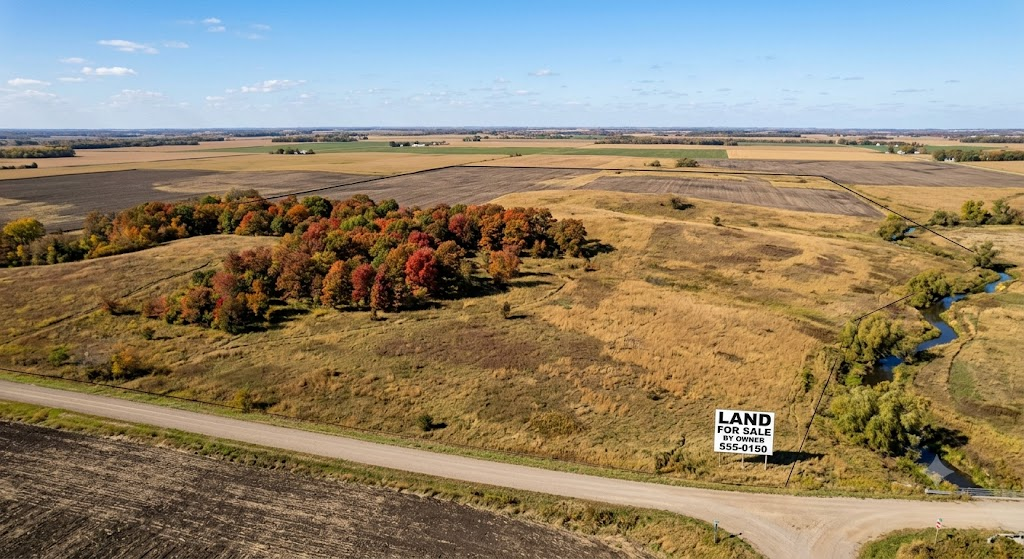
Instead of typing a generic description, write a detailed narrative highlighting local geographic markers, specific use cases, and nearby natural landmarks. Mention whether the land is suitable for off-grid homesteading, hobby farming, or commercial development. Take high-quality, clear photographs of the boundary lines during daylight hours, and consider securing drone footage to give remote buyers a full view of the topography. Share your listing across specialized land marketplaces, local digital classifieds, and real estate groups to maximize your online footprint.
According to a real estate marketing report published by the National Association of Realtors (NAR), over 50% of buyers initially discover their future properties online, emphasizing the massive importance of maintaining an optimized, text-rich digital listing to capture web traffic.
Bypassing the Hassle: A Faster Path to Closing
Managing an independent land sale requires a notable time commitment. You must constantly field inquiries, filter out unqualified buyers, coordinate property tours, and handle legal compliance with a title company. For property owners who live out of state, or those who simply do not want to manage a prolonged marketing campaign, waiting months for a retail buyer can become incredibly exhausting.
If you want to skip the complexities of listing, marketing, and negotiating entirely, working with a direct land investor is a highly efficient alternative. Companies like DPR Land specialize in purchasing raw acreage directly from owners across the country. By cutting out the open market entirely, you can secure a guaranteed cash offer, avoid all closing costs, and wrap up the entire transaction in a matter of days rather than months.